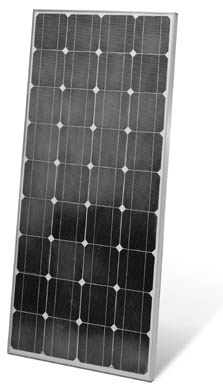
The solar industry is poised for a rapid decline in costs that will make it a mainstream power option in the next few years, according to a new assessment by the Worldwatch Institute in Washington, D.C., and the Prometheus Institute in Cambridge, Massachusetts.
Global production of solar photovoltaic (PV) cells, has risen sixfold since 2000 and grew 41 percent in 2006 alone. Although grid-connected solar capacity still provides less than 1 percent of the world’s electricity, it increased nearly 50 percent in 2006, to 5,000 megawatts, propelled by booming markets in Germany and Japan. Spain is likely to join the big leagues in 2007, and the United States soon thereafter.
This growth, while dramatic, has been constrained by a shortage of manufacturing capacity for purified polysilicon, the same material that goes into semiconductor chips. But the situation will be reversed in the next two years as more than a dozen companies in Europe, China, Japan, and the United States bring on unprecedented levels of production capacity. In 2006, for the first time, more than half the world’s polysilicon was used to produce solar PV cells. Combined with technology advances, the increase in polysilicon supply will bring costs down rapidly-by more than 40 percent in the next three years, according to
Prometheus estimates.